
March 1, 2026
Natural Stone vs. Brick Pavers: Which Holds Up Better Over Time?
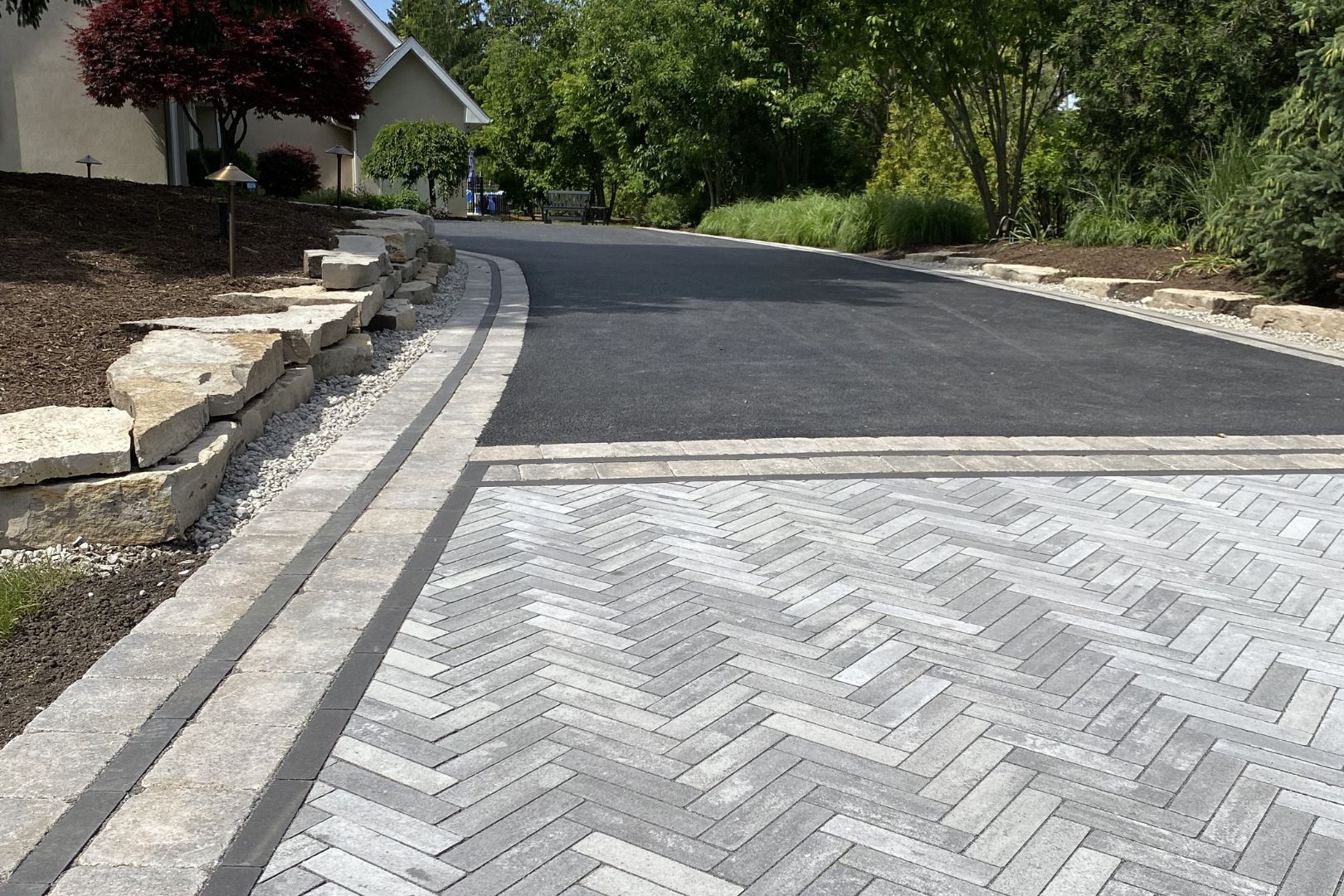
When homeowners in Northern Illinois and Southeastern Wisconsin start planning a driveway, patio, or walkway project, natural stone and brick pavers consistently rank among the top material choices. Both offer a level of visual appeal that asphalt and standard concrete simply cannot match, and both are widely regarded as premium, long-lasting surfaces. But when it comes to actual long-term performance in a climate like Chicagoland and the Kenosha County area, the differences between the two materials are significant and worth understanding before you make a decision.
The question of which material holds up better over time is not a simple one. It depends on the specific type of natural stone or brick paver being considered, how well the base is prepared, how the installation is executed, and what kind of maintenance the surface receives over the years.
Natural Stone & Brick Pavers Are Not One-Size-Fits-All
What Is Natural Stone Paving?
Natural stone is quarried directly from the earth and cut or split into usable sizes for paving applications. The most common types used in residential and commercial paving projects include bluestone, limestone, travertine, granite, slate, and flagstone. Each type of natural stone has its own density, porosity, hardness rating, and freeze-thaw behavior, which means performance varies considerably from one stone type to another.
Granite, for example, is one of the hardest and most dense natural stones available and performs extremely well in cold climates. Travertine, on the other hand, is a more porous limestone-family stone that can absorb water and is more vulnerable to freeze-thaw damage if not properly sealed. Understanding which type of natural stone is being proposed for your project is essential before drawing any conclusions about how it will perform.
What Are Brick Pavers?
Brick pavers are manufactured units made from clay that is fired at very high temperatures to produce a hard, dense, and durable surface material. Unlike standard clay bricks used in construction, pavers intended for driveway and patio applications are made to specific density and absorption standards that make them suitable for vehicular and pedestrian traffic. Concrete pavers are also commonly grouped into discussions of brick pavers, though they are a distinct product made from a portland cement and aggregate mix rather than fired clay.
For the purposes of this comparison, we are focusing primarily on clay brick pavers, which are the traditional choice for high-end residential paving projects and have a well-documented performance history in cold-climate regions like the Midwest.
Durability & Longevity
Natural Stone Durability in the Illinois & Wisconsin Climate
Dense natural stones like granite and bluestone are exceptionally durable and can last for generations when properly installed. Granite in particular has a very low absorption rate, which means water penetration and freeze-thaw damage are minimal concerns. These stones are frequently found in historic urban streetscapes that have been in place for well over a century, which speaks to their longevity under heavy use and extreme weather cycles.
The durability story changes, however, with more porous stone types. Limestone, sandstone, and certain flagstone varieties absorb more water, which makes them more susceptible to freeze-thaw damage in the Illinois and Wisconsin climate. When water enters the pores of a softer stone and freezes, the expansion can cause surface flaking, cracking, and spalling over time. In the Chicagoland Southeastern Wisconsin area, where freeze-thaw cycles occur dozens of times per season, choosing a high-absorption stone without a rigorous sealing program is a recipe for premature deterioration.
Brick Paver Durability in the Illinois & Wisconsin Climate
High-quality clay brick pavers are manufactured to achieve very low absorption rates, typically under 5%, which is what makes them well-suited to freeze-thaw climates. The firing process used to make clay pavers drives out most of the moisture and creates a dense, vitrified material that resists water infiltration naturally. This characteristic is one of the primary reasons brick pavers have such a strong track record in cold-climate states like Illinois, Wisconsin, and Michigan.
When installed over a properly compacted aggregate base with adequate depth for the local frost line, brick paver surfaces can last 30 to 50 years with relatively modest maintenance requirements. Individual pavers that crack or shift can be removed and replaced without disturbing the surrounding surface, which is a significant advantage over poured surfaces like concrete that require saw cutting and patching when repairs are needed.
Which Material Lasts Longer?
For dense stone types like granite and bluestone, the answer is effectively a tie with high-quality brick pavers. Both can last for many decades when properly installed and maintained. For softer or more porous natural stones, brick pavers generally hold up better over time in the Illinois and Wisconsin freeze-thaw climate because their low absorption rate is a built-in feature of the material rather than something that depends entirely on surface sealing to achieve. The honest answer is that installation quality and base preparation matter at least as much as the material itself when it comes to long-term durability.
Freeze-Thaw Performance For Illinois & Wisconsin Homeowners
In the Chicagoland and Southeastern Wisconsin area, freeze-thaw performance is the single most important durability factor for any paving material. Temperatures that cycle above and below 32 degrees Fahrenheit dozens of times each winter put constant stress on any paved surface. Understanding how natural stone and brick pavers respond to this specific stress is critical for making an informed material decision.
How Natural Stone Responds to Freeze-Thaw Cycles
The freeze-thaw performance of natural stone is almost entirely determined by its absorption rate and internal structure. Dense, low-absorption stones like granite, quartzite, and hard bluestone handle freeze-thaw stress very well. Their pore structure does not allow significant water penetration, so there is little moisture inside the stone to expand when temperatures drop below freezing.
Softer stones with higher absorption rates are a different story. When water enters these stones and freezes, the volumetric expansion puts internal stress on the stone structure. Over many freeze-thaw cycles, this stress can result in surface spalling, corner chipping, and in some cases, full fracturing of individual pieces. Sealing helps reduce absorption, but sealers require regular reapplication and are not a substitute for choosing the right stone type from the start.
How Brick Pavers Respond to Freeze-Thaw Cycles
Clay brick pavers manufactured to paving standards perform very reliably in freeze-thaw conditions when the product meets the appropriate specifications. The American Society for Testing and Materials has established standards for brick paver absorption and durability that separate pavers intended for severe weathering exposures, such as the Illinois climate, from those intended for moderate or negligible weathering regions.
Pavers that meet the severe weathering specification have demonstrated resistance to the kind of repeated freeze-thaw cycling that occurs in Northern Illinois and Southeastern Wisconsin. When installed on a base that drains well and is deep enough to account for the local frost depth, properly specified brick pavers hold up to the Illinois winter with minimal surface deterioration. The interlocking nature of the paver system also allows minor ground movement from frost heave to be accommodated without cracking, since individual pavers can shift slightly and be reset rather than fracturing like a rigid surface.
Maintenance Requirements
Maintaining a Natural Stone Surface
Natural stone maintenance requirements vary significantly by stone type. Dense, low-porosity stones like granite require very little maintenance beyond periodic cleaning. More porous stones require sealing every one to three years to maintain their resistance to water infiltration, staining, and freeze-thaw damage. Joint sand between stone pieces also needs to be replenished periodically as it settles or washes out over time.
One of the more challenging aspects of maintaining natural stone is the difficulty and cost of repairs. Because natural stone is quarried in variable sizes, thicknesses, and colorations, finding a perfect match for a damaged piece years after the original installation can be difficult or impossible. The stone from a particular quarry may no longer be available, or the color match may be close but not exact, which can leave a visible repair even when the structural fix is sound.
Maintaining a Brick Paver Surface
Brick paver maintenance is generally straightforward and manageable for most homeowners. Periodic joint sand replenishment is the most common ongoing task, as the polymeric sand used between pavers can erode over time from water, foot traffic, and freeze-thaw movement. Sealing brick pavers every two to four years helps lock joint sand in place, enhance color, and reduce staining from oils, leaves, and other organic material.
The most significant maintenance advantage brick pavers offer is the ease of repairs. Because pavers are modular units in standard sizes, replacing a damaged or stained paver is a straightforward process that does not require specialized tools or skilled stone matching. A matching paver from the original product line can be sourced, the damaged unit removed, and a replacement set in place with minimal disruption to the surrounding surface.
Which Material Requires Less Maintenance?
For dense natural stones, maintenance requirements are comparable to brick pavers. For more porous natural stones, brick pavers generally require less ongoing effort to maintain their protective properties. The clear advantage brick pavers hold in both cases is the ease of individual unit replacement, which makes long-term maintenance significantly simpler and less costly than dealing with damaged natural stone pieces that may be difficult or expensive to match.
Aesthetics & Design Flexibility
It is important to be balanced in this comparison, and aesthetics is an area where natural stone holds a genuine and significant advantage over brick pavers for many homeowners and applications.
The Visual Appeal of Natural Stone
Natural stone is irreplaceable in terms of the depth, variation, and organic character it brings to a paving project. No two pieces of natural stone are identical, which creates a visual richness and authenticity that manufactured products struggle to replicate. For homeowners seeking a truly distinctive, high-end appearance for a patio or entryway, the natural variation in color, texture, and surface character of materials like bluestone, granite, or limestone is a major draw.
Natural stone also tends to age gracefully. As it weathers over time, it often develops a patina that adds to its character rather than detracting from it. This quality makes it particularly appealing for traditional and historic home styles where a sense of permanence and craftsmanship is part of the design vision.
The Design Versatility of Brick Pavers
Brick pavers offer a different kind of design flexibility. Because they are manufactured products, they are available in a consistent range of sizes, colors, and finishes that make it easier to plan and execute a specific design vision with predictable results. Pavers can be laid in a wide variety of patterns, including running bond, herringbone, basketweave, and custom geometric arrangements, and the consistent sizing makes complex patterns more achievable than they would be with irregularly shaped natural stone.
The range of color options available in brick and concrete pavers has expanded significantly in recent years, and high-quality paver products can closely approximate the appearance of certain natural stone types. However, for a discerning eye, the manufactured uniformity of pavers is still distinguishable from the organic variation of genuine natural stone.
Which Material Is Right for Your Driveway, Patio, or Walkway?
Choose Natural Stone If…
- Aesthetic authenticity and organic character are the top priorities for your project
- You are selecting a dense, low-absorption stone type like granite, quartzite, or hard bluestone
- The project is a patio, courtyard, or walkway with lighter traffic loads rather than a full vehicle driveway
- You have the budget for premium material and skilled installation and are committed to a regular sealing program
- Your home’s architectural style calls for the unique character that only genuine natural stone can provide
Choose Brick Pavers If…
- Long-term freeze-thaw durability in the Illinois and Wisconsin climate is the primary concern
- The project is a driveway or high-traffic surface that will see regular vehicle loads
- You want a manageable maintenance program with straightforward repair options if individual units are damaged
- Your project requires a specific pattern or consistent color palette that natural stone’s variability makes difficult to guarantee
- You want a premium paving surface with proven Midwest performance at a more accessible price point than natural stone
Contact Total Paving & Brick Services About Your Natural Stone Or Paver Project
Total Paving and Brick Services has extensive experience installing both natural stone and brick paver surfaces for homeowners and commercial property owners across Lake County, Cook County, McHenry County, and Kenosha County, Wisconsin. Our team can walk you through the specific material options that perform best in the Northern Illinois climate, help you evaluate the design and budget tradeoffs, and provide a detailed estimate for your project.
We offer 3D design services that let you visualize your project before installation begins, so you can see how different materials and patterns will look on your specific property before committing to a direction. Contact Total Paving and Brick Services today to get a free quote.