
September 1, 2026
ADA-Compliant Paving: What Illinois Business Owners Need To Know
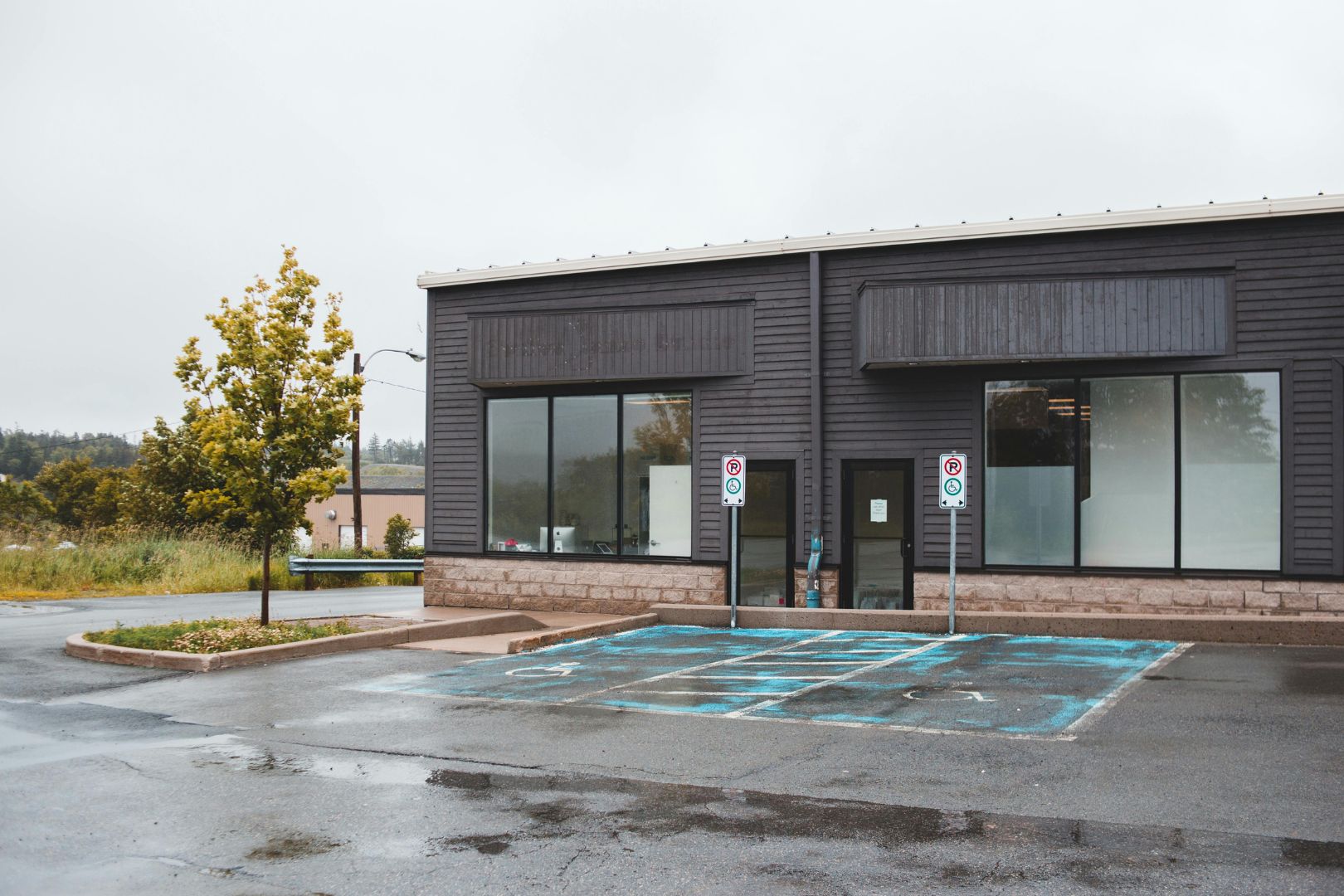
For business owners and commercial property managers in Northern Illinois and Southeastern Wisconsin, ADA-compliant paving is not optional. The Americans with Disabilities Act sets specific, enforceable standards for accessible routes, parking areas, ramps, and walkways that apply to virtually every commercial property open to the public. Failing to meet those standards puts your business at risk of complaints and legal action, and it sends a message to a large share of your customers, employees, and visitors that your property was not built with them in mind.
The good news: ADA compliance in exterior paving is achievable, and when done correctly, it adds lasting value to your property. This guide covers ADA parking lot requirements, where violations most commonly occur, how the Illinois climate affects accessible surfaces over time, and what to look for in a commercial paving contractor.
ADA Parking Lot & Accessible Route Requirements for Commercial Properties
The ADA Standards for Accessible Design, enforced by the U.S. Department of Justice, cover a wide range of exterior site features involving paved surfaces. For commercial properties, the requirements that come up most often involve accessible parking spaces, access aisles, accessible routes from parking to building entrances, curb ramps, and the slope and condition of paved walkways.
Accessible Parking Space Dimensions & Slope Limits
- Standard accessible spaces must be at least 96 inches wide
- Van-accessible spaces need a minimum of 132 inches of width, either as a wider space or a standard space with an adjacent 60-inch access aisle
- Every accessible space must connect to a marked access aisle leading to an accessible route
- Surfaces must be stable, firm, and slip-resistant
- Slope cannot exceed 1:48 in any direction
That last point is where most Chicago-area and Southeastern Wisconsin properties run into trouble. Lots graded before accessibility standards were well understood frequently exceed the 1:48 tolerance, especially on older properties.
Accessible Route Width & Slope Standards
An accessible route is a continuous, unobstructed path connecting accessible elements of a building or facility. For paving purposes, that means the pathway from accessible parking to the entrance, and from public sidewalks to the entrance, has to meet specific standards.
- Minimum clear width: 36 inches (44 inches or more recommended in high-traffic areas)
- Running slope (direction of travel): cannot exceed 1:20 unless built as a compliant ramp
- Cross slope (perpendicular to travel): cannot exceed 1:48
- Surfaces must be free of level changes greater than half an inch, with vertical changes limited to a quarter inch
Curb Ramp & Detectable Warning Surface Requirements
Curb ramps are required anywhere an accessible route crosses a curb.
- Running slope: no greater than 1:12
- Cross slope: no greater than 1:48
- Minimum width: 36 inches, exclusive of flared sides
- Detectable warning surfaces (truncated domes) required at the base, where the ramp meets the vehicle travel lane
Detectable warning surfaces are one of the most commonly missing or deteriorated features on older Illinois commercial properties. They are not decorative. They give visually impaired pedestrians a tactile cue that they are approaching a vehicular area, and their absence is a citable deficiency.
Parking Lot Striping & ADA Signage
Compliance is not purely a paving issue. Accessible spaces need the International Symbol of Accessibility, van-accessible spaces need additional signage, and access aisles need hatching or markings that keep vehicles from parking in them. Striping and signage are usually addressed alongside surface work as part of a full ADA parking lot upgrade.
Where ADA Paving Violations Most Commonly Occur on Illinois Properties
ADA audits of commercial properties across Illinois keep turning up the same handful of problem areas.
Excessive slope in accessible parking spaces. The single most common deficiency in the Chicago area and Southeastern Wisconsin. Lots graded before 1990, or before current standards were applied correctly, often exceed 1:48 in one or more directions. Paint and signage will not fix this. It requires regrading and repaving.
Deteriorated surface conditions on accessible routes. A compliant surface does not stay compliant forever. Freeze-thaw cycling, water infiltration, and vehicle traffic cause cracks, heaving, and settlement. A one-inch height change at a crack is a compliance failure, no matter how the walkway was originally built.
Missing or deteriorated detectable warning surfaces. Cast-in-place dome panels crack and separate in freeze-thaw climates. Retrofit panels can delaminate if the substrate underneath moves.
Improper cross slopes on walkways. The 1:48 limit is stricter than it looks. Many sidewalks that appear flat exceed it when measured with a level or digital slope meter, creating a constant drift toward the low side for wheelchair users.
Gaps and level changes at transitions. Lifted panel edges, drain covers sitting proud of the surface, and gaps where asphalt meets settled concrete all create barriers at exactly the points where people need a smooth path.
How Illinois Freeze-Thaw Winters Undermine ADA-Compliant Surfaces
For business owners in Northern Illinois and Southeastern Wisconsin, ADA compliance is not a project you finish once. The regional climate works against compliant surfaces continuously.
Freeze-Thaw Cycling & Changing Surface Geometry
When water beneath a paved surface freezes, it expands and lifts the material above it. When it thaws, the surface settles, but rarely back to its original position. Over several seasons, this shifts slope, creates new height differentials at joints, and cracks surfaces on accessible routes.
A lot that measured compliant in year one can have measurable slope changes and new defects by year three or four. That is not a construction failure. It is the predictable effect of the regional climate on any paved surface, which is why a periodic accessibility inspection belongs on your property maintenance calendar.
Winter Maintenance Around Accessible Parking & Routes
Snow piled in access aisles, plowed over curb ramp openings, or packed at the edge of accessible spaces creates a temporary barrier just as real as a non-compliant slope. Snow removal protocols need to specifically address accessible parking, access aisles, and accessible routes.
Road salt and deicing chemicals accelerate deterioration of asphalt and concrete on accessible routes, the same way they damage residential driveways. Surface deterioration that results in a non-compliant walkway is a compliance issue, not just a maintenance one.
ADA Requirements for New Construction vs. Existing Commercial Properties
New Construction & Major Renovations
New parking lots, driveways, walkways, and accessible routes must be designed and built to meet current ADA standards in full. There is no grandfather exemption. If you are building a new facility or expanding one, ADA compliance is a design requirement from day one.
Existing Properties & the “Readily Achievable” Standard
Existing properties not undergoing major alterations must remove barriers to the extent that doing so is readily achievable, meaning accomplishable without much difficulty or expense relative to the business’s resources. This standard flexes based on the size of the business, but it is not a permanent exemption. Courts and enforcement agencies routinely find that parking lot resurfacing, curb ramp installation, and accessible route repair fall within readily achievable for most commercial owners. Any exterior paving project creates an obligation to address known accessibility deficiencies in that area at the same time.
The Path of Travel Requirement
When a business alters a primary function area of its facility, the ADA requires making the path of travel to that area accessible too, up to 20 percent of the total alteration cost. If you are repaving a significant portion of your lot, you may need to address accessible route deficiencies connecting that lot to your entrance, even if the route was not part of the original project scope. Knowing this before the project starts helps you budget accurately instead of discovering it mid-project.
What to Look for in an ADA Compliant Paving Contractor
Not every paving contractor has real experience with the tolerances involved in ADA work. Here is what separates a contractor who delivers genuine compliance from one who delivers a surface that just looks acceptable.
Slope Verification Before & After Installation
A qualified contractor verifies existing slopes before proposing a solution and confirms final slopes after the work is done. The 1:48 and 1:20 tolerances are too tight for visual estimation. Look for a contractor using digital slope meters during installation.
Curb Ramp Design Experience
Curb ramp work involves flare design, detectable warning surface placement, side slope management, and a clean transition to the accessible route. Ask about previous curb ramp projects and familiarity with Illinois Department of Transportation standard drawings.
Drainage & Grading Expertise
ADA slopes and proper drainage can work against each other. A lot that drains well but has accessible spaces sloped at 1:30 is not compliant. A lot with flat accessible spaces that pools water creates a different problem. An experienced contractor balances both.
Comprehensive Project Scope
The strongest ADA upgrades treat accessible parking, access aisles, route surfaces, curb ramps, and transition points as one coordinated project rather than a series of isolated patches.
Why Choose Total Paving & Brick Services for Your ADA Paving Project
Total Paving and Brick Services is a family-owned, women-owned, and locally owned business that has completed thousands of paving projects across Illinois and Wisconsin.
- More than 25 years of hands-on experience with commercial and residential paving
- Familiarity with the specific slope tolerances and surface standards that ADA compliance requires
- A full-service approach covering estimates, design, demolition, and installation, so accessible parking, routes, and curb ramps are handled as one project
- A track record of clear communication and attention to detail from the first site visit through project completion
We bring the same precision to commercial ADA work that we bring to every residential driveway and patio we install.
Schedule an ADA Paving Assessment With Total Paving & Brick Services
If your property has not been assessed for ADA compliance recently, or if you are planning a parking lot resurfacing project and want to address accessibility issues at the same time, our team can provide an on-site evaluation and a detailed, no-obligation estimate. We serve Lake County, Cook County, McHenry County, and Kenosha County, Wisconsin.
Request your free quote to schedule a commercial paving consultation with Total Paving and Brick Services.
