
August 1, 2026
Sealcoating vs. Infrared Patching: When Each Makes Sense for Your Asphalt Driveway
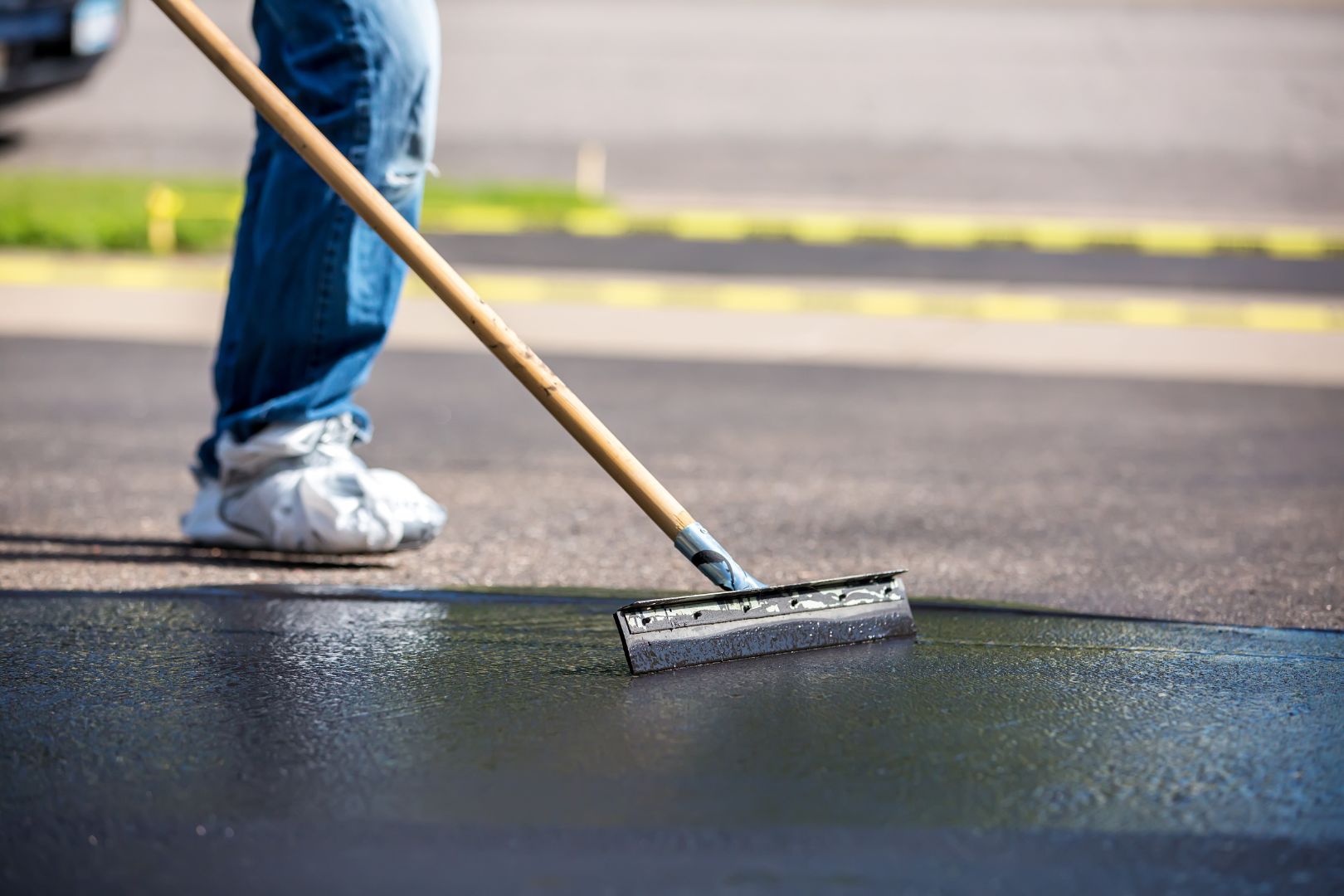
When an asphalt driveway starts showing signs of wear, homeowners often wonder whether they need sealcoating, infrared patching, or both. These are two very different services that solve two very different problems. Choosing the wrong one wastes money and delays the treatment your driveway actually needs, which can lead to more serious damage down the road.
What Is Asphalt Sealcoating?
Sealcoating is a liquid asphalt-based coating applied to the surface of an existing driveway. It is a preventive maintenance treatment, not a repair method. Think of it like sunscreen for your pavement. It slows down the natural aging process and protects the surface from the elements that accelerate deterioration.
Sealcoating does not fix structural problems, fill deep cracks, or restore a failing surface. What it does do is buy you years of additional life on a driveway that is already in good shape.
What Sealcoating Protects Against
- UV oxidation that dries out the asphalt binder and causes fading and brittleness
- Water infiltration during Northern Illinois freeze-thaw cycles
- Oil and gas spills that soften and break down asphalt over time
- Road salt exposure common throughout the Chicago area winter season
How Long Does Sealcoating Last in Northern Illinois?
A professionally applied sealcoat typically lasts 2 to 4 years in the Midwest climate. Most contractors recommend sealing a new driveway for the first time 6 to 12 months after installation, then on a 2 to 3 year schedule going forward.
Applying sealcoat too frequently causes buildup and cracking. A reputable contractor will assess your surface condition before recommending a reapplication.
When Sealcoating Is the Right Choice for Your Driveway
Sealcoating makes sense when your driveway is structurally sound, and you want to extend its life before more serious problems develop. Good candidates include driveways that:
- Are less than 20 years old and structurally intact
- Show surface oxidation or graying but no significant cracking
- Have only hairline cracks under 1/4 inch wide
- Have not been sealed within the past 2 to 3 years
- Are free of soft, sunken, or unstable sections
When Sealcoating Is NOT the Right Choice
Sealcoating is frequently misunderstood as a fix for cracked or deteriorating driveways. It is not. Applying sealcoat over significant cracks, alligator cracking, or soft spots temporarily hides the damage while the underlying problem continues to grow. Structural issues must be addressed before any sealcoat is applied.
What Is Infrared Asphalt Patching?
Infrared patching is a specialized repair method that uses infrared heat to soften and reclaim existing asphalt so it can be reworked, supplemented with fresh material, and recompacted into a seamless repair. Unlike cold-patch methods that layer new material on top of old, infrared patching bonds the repair into the surrounding asphalt, eliminating the seams where water re-enters.
This seamless bond is why infrared patching outperforms traditional cut-and-patch methods in freeze-thaw climates like Northern Illinois, where patch edges tend to re-crack and separate over time.
What Problems Infrared Patching Is Designed to Fix
- Potholes and low spots where water pools on the surface
- Edge cracking and deterioration along driveway borders
- Utility cut repairs where pavement was disturbed for underground work
- Sunken or uneven sections caused by minor base settlement
- Isolated alligator cracking that has not spread across the full surface
How Long Does an Infrared Patch Last?
When performed correctly, infrared repairs can last 7 to 10 years or more because the repair is thermally bonded rather than layered on top. The longevity depends on the condition of the base beneath the repair. If the underlying base is compromised, no surface repair will hold long-term and a more comprehensive solution is the right path forward.
When Infrared Patching Is the Right Choice
Infrared patching is the right choice when a driveway is generally in fair to good condition overall but has specific areas of damage beyond what sealcoating can address. Good candidates include driveways that:
- Have isolated potholes, low spots, or sunken sections
- Show localized cracking rather than widespread surface failure
- Have utility cuts or disturbed sections that need leveling
- Experience water pooling in specific areas due to surface settlement
- Are structurally sound overall but deteriorating in targeted zones
Sealcoating vs. Infrared Patching: Key Differences
These services are not competing options for the same problem. They solve entirely different problems.
Surface Condition Required
Sealcoating requires a surface that is structurally sound and relatively damage-free. Infrared patching is used specifically when the surface is not sound in certain areas and needs active repair.
Cost Comparison for Northern Illinois Homeowners
Sealcoating is generally less expensive per square foot because it is a surface application rather than a repair process. However, comparing the two purely on cost misses the point. If your driveway needs infrared repairs, sealcoating alone will not address the problem regardless of price.
In many cases the two services work together: infrared patching repairs the damaged areas first, then sealcoating is applied over the entire surface to protect and unify the appearance of the finished driveway.
Seasonal Timing in the Chicagoland Area
Both services are weather-dependent. Sealcoating requires air and surface temperatures above 50°F with no rain in the forecast for at least 24 hours. Infrared patching is more flexible due to its heat-based process but performs best during warmer months. The ideal window for both in Northern Illinois is late spring through early fall, with late summer being a particularly productive time to get ahead of winter damage.
When Neither Sealcoating Nor Infrared Patching Is Enough
Both services have their limits. If your driveway shows any of the following, a full replacement evaluation is the right next step:
- Widespread alligator cracking across more than 25 to 30% of the surface
- Multiple sunken or soft sections indicating base failure
- A driveway more than 25 to 30 years old with ongoing deterioration
- Repeated patch failures in the same areas despite prior repairs
- Significant drainage issues that cannot be corrected at the surface level
A full replacement with proper base preparation for Illinois frost depth and soil conditions will outlast years of repeated patching. Total Paving and Brick Services performs a thorough on-site assessment before recommending any service and will always give you an honest evaluation of whether repair or replacement is the better investment.
Why Northern Illinois & Southeastern Wisconsin Homeowners Trust Total Paving & Brick Services
Choosing the right treatment is only half the equation. The quality of the contractor executing it is the other half.
Total Paving and Brick Services has served homeowners and commercial property owners across Lake County, Cook County, McHenry County, and Kenosha County for over 30 years. Here’s what sets us apart:
- Honest assessments: We evaluate your driveway thoroughly before recommending any service. We do not upsell treatments you do not need.
- Full-service capabilities: From sealcoating and infrared patching to full replacement, we handle every stage of asphalt care in-house.
- Experienced crews: Our pavement technicians are trained in infrared repair methods that most general contractors do not offer.
- Local expertise: We understand Northern Illinois and Southeastern Wisconsin soil conditions, frost depths, and seasonal timing better than anyone.
- Transparent process: Clear communication from your free quote through project completion, every time.
Get a Free Asphalt Driveway Assessment from Total Paving & Brick Services in Northern Illinois
Not sure whether your driveway needs sealcoating, infrared patching, or something more? Our team will give you a straight answer.
Total Paving and Brick Services proudly serves Park City, Waukegan, Lake County, Kenosha, Racine, and surrounding communities throughout Northern Illinois and Southeastern Wisconsin.
Request your free quote online today and get a detailed, no-obligation estimate for your driveway project.
